Grooming & Care
The Ultimate Guide to a Stress-Free Bath Time for Your Dog
Last updated 12 September 2026
Bath time can feel like a big event, especially if your dog would rather be anywhere else. It does not have to stay that way. A calm setup, a gentle pace, and a routine your dog can recognise will do more than a rush to get it over with. These are simple ways to make each bath calmer, gentler, and more enjoyable for both of you.
Set the room up before the water goes on
The easiest baths start while your dog is still dry. Lay a towel where you can reach it without turning away. Set out a brush or comb, a soft cloth for the face, and a shampoo made for dogs. FurryFix Shed Control 2-in-1 Conditioning Shampoo is the shampoo in the FurryFix range, so it is the bottle to keep with your bath things. Place it where one hand can find it.
Choose a warm, quiet spot. A bathroom with the door closed gives you a smaller world, which many dogs find easier than an open hallway full of places to run. If the sound of the tap makes your dog tense, let a little water run before you invite them in, so the noise is already part of the background when they arrive.
A non-slip mat is a small thing that changes the feeling under their paws. Slipping is startling. Steady footing lets your dog pay attention to you instead of bracing for a skid. If you do not have a mat, a towel you can spare on the floor of the tub is a start.
Invite them in, then go slowly
Let your dog sniff the tub, the towel, and your hands. That pause is part of the bath, not a delay in front of it. Use the same easy voice you use on the sofa. Praise a paw on the mat, then two paws, then standing still. If they already hop in happily, you can move forward. If they hesitate, those small steps are the real work for today.
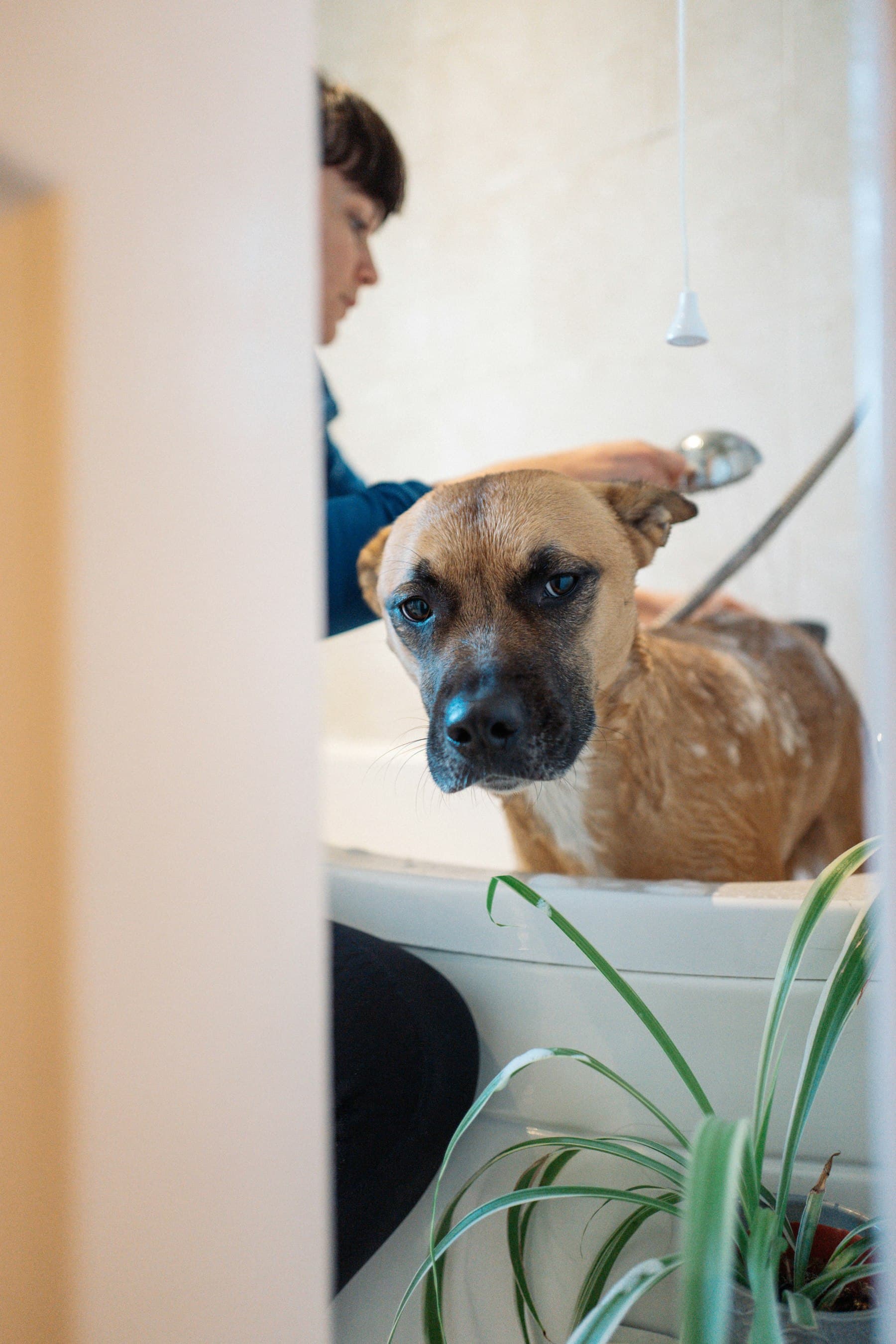
Wet the coat in stages: a paw, a leg, the chest, then the back. Many dogs settle once they feel that the water is on their fur and not pouring toward their eyes. Keep one hand in contact so they always know where you are. A dog who can predict the next touch usually stays softer in the body. If they shake, pause and begin again without a scolding.
Keep the water comfortable
Check the water on the inside of your wrist before it touches your dog. It should feel lukewarm, never hot and never chilly. A stream that feels fine on your hands can still feel sharp on a belly with less fur, so start there with a gentler flow. Support a small dog so they feel held rather than perched. A larger dog often does best with you beside them, working along one side at a time.
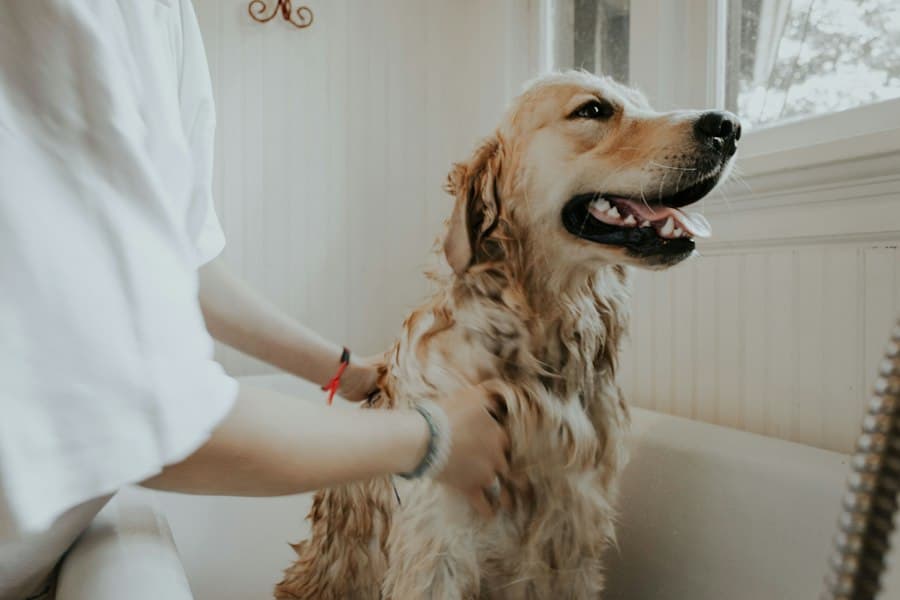
Work the water through the coat down toward the skin, especially if the fur is thick. The top can look soaked while the undercoat is still dry. Slow circles with your fingers tell you more than a glance. If your dog leans into the massage, stay with that rhythm. If they stiffen, lighten your hand and give them a breath.
Lather gently, then rinse until the coat feels clean
Massage shampoo with your fingertips, following the way the coat grows. Paws, the belly, and the feathering on the legs pick up a lot of the day, so give them unhurried attention. Stay clear of the eyes. A damp cloth is usually kinder on the face than a stream of water. Fold the cloth so you can wipe around the muzzle without dripping down the nose.
Rinse until the coat no longer feels slippery. Leftover lather can leave fur tacky, and it may bother the skin later when it dries. Slide your hands through the coat as you rinse so you can feel the change from slick to simply wet. Ears need care too: you can wipe the outer ear with a cloth, and you can keep a full pour of water out of the ear canal. If you notice redness, bumps, or anything unusual or concerning, consult your veterinarian.
Drying is part of the bath
Press water out of the coat with your hands before you reach for the towel. Then wrap your dog and pause. Some dogs love a lively rub and will wag through the whole thing. Others want a quiet hold and a chance to shake once. Follow their mood. Keep them warm until they are mostly dry, especially in a cool room or if their coat is short and they chill quickly.
When the fur is damp rather than dripping, a gentle brush can ease tangles before they tighten. Work a small section, then another. Stop if your dog asks for a break by turning away or mouthing the brush. A short, kind finish teaches them that bath time has an ending they can trust.
Leave them with a good memory
Offer a familiar toy, a cuddle, or a few quiet minutes together once they are comfortable. You do not need a performance. Dogs remember how a bath finishes more clearly than they remember the middle. If the last moment is soft, the next beginning is easier to offer.
With a little patience and plenty of love, bath time can become one more happy moment you share together.
Key takeaways
- Set out the towel, mat, and dog shampoo before you invite your dog in.
- Wet, lather, and rinse at a pace your dog can follow, and keep water away from the eyes.
- Rinse until the coat no longer feels slippery, then dry and brush only as long as they stay comfortable.
- End with a calm, familiar moment so the next bath begins more easily.